
New York Fashion Week opens on September 10 with Henry Zankov’s first collection as artistic director of Diane von Furstenberg, and closes six days later with Thom Browne. Almost nothing shown in between will be available to buy before January. That gap is neither an accident nor a marketing tactic. It is the oldest working assumption in the business, and it is the reason a show staged in September is called Spring/Summer 2027.
The gap between the show and the shop
A runway show is a sales meeting held in public. The audience that matters commercially is not the one watching on a phone but the buyers who will place orders in the showroom appointments known collectively as market. Those orders determine how many units get made, in which colors, and for which countries. Until they are in, a brand does not know what to produce.
Market does not sit neatly after the show, either. For this same Spring/Summer 2027 season, New York’s pre-spring buying period ran from late May into early July of 2026, and London’s from May into June — months before anything walked a runway, because resort and pre-spring ranges are ordered on their own schedule. By the time the September shows begin, a significant share of the season has already been sold in. The show confirms and dramatizes decisions that were, in part, taken in a showroom in June.
What happens next consumes most of the six months. Fabric has to be ordered from mills that impose minimum quantities and allocate production slots well in advance. Factories cut, sew, and finish. Goods are inspected, shipped, cleared through customs, and distributed to stores across several continents. For a label without owned factories, that sequence is tight rather than generous, and missing a delivery window by three weeks can mean a canceled order.
None of this is visible from the front row, which is part of the problem. The show looks like a launch and functions like a preview. The clothes exist in single sample sizes, made by hand in the weeks before, and in some cases they exist only as samples: a share of every runway collection is built to be photographed and never enters production at all.
Where the six months came from
The rhythm predates the industry that now complains about it. Parisian couture houses showed privately to private clients and to visiting department store buyers, who crossed the Atlantic once or twice a year and needed months to get models home, licensed, and reproduced for their own floors. The calendar hardened around the speed of that travel and that manufacturing, and the cadence outlived both.
New York’s version has a documented starting point. In 1943, with Paris under German occupation and American press and buyers unable to travel, the publicist Eleanor Lambert gathered American designers into a single week of showings at the Plaza Hotel, organized under the New York Dress Institute. Press Week, as it was known, was built to get American clothes into magazines that had until then been filled with French ones. The CFDA consolidated the event under a single name in 1993.
Print set the second constraint, and it set it hard. A magazine’s spring issue was planned, shot, and printed months before it reached a newsstand, which meant editors had to see spring clothes in the fall or not publish them at all. Six months was roughly the distance between a show and a shop floor, and roughly the distance between an editor seeing a dress and a reader seeing the photograph. The two clocks were set to each other, and September became the month the year turned.
The month then acquired a second job. September issues became the largest advertising books of the year for both American and British titles, timed to the fall buying season, which gave brands a reason to concentrate their spending and their imagery in the same weeks the shows ran. Advertising, editorial, and wholesale ended up pointing at one fortnight. That is a lot of accumulated infrastructure to move, and it explains why the calendar has outlasted almost every argument made against it.
The two clocks, and which one you are shopping
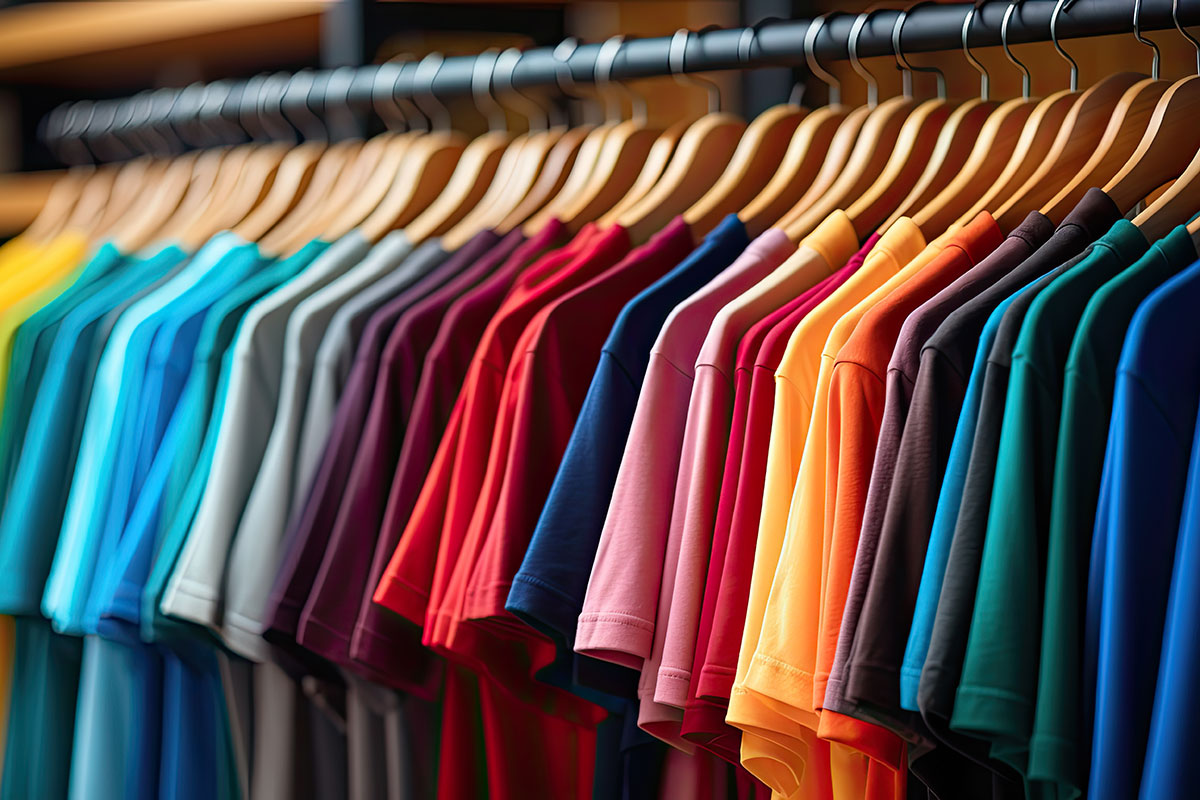
Between August and October 2026, what hangs in stores is Fall/Winter 2026-27, shown on runways back in February. What walks the runway in September is Spring/Summer 2027, due in stores from January. Both are current in different senses, and the confusion is structural rather than the reader’s failing.
The practical consequence is worth stating plainly. When a look from a September show circulates widely, it is five or six months from being purchasable, and it may never be purchasable at all. What you can buy that same week is the previous season, frequently on markdown, because end-of-season selling and the next season’s shows now sit on top of each other in the same fortnight.
When the calendar stopped matching the weather
The six-month gap describes the distance between a show and a delivery. It says nothing about whether that delivery lands in the right weather, and for the past two decades it mostly has not. Retailers competing to be first pulled deliveries forward: spring dresses in January, coats in July, wool in the heat and cotton in the cold. What worked as one store’s advantage became the industry’s structural problem.
Early deliveries shorten the full-price window. Clothes that arrive months before anyone needs them sit, and stock that sits gets marked down, often while the season it was designed for is still ahead. In May 2020, Dries Van Noten and Lane Crawford president Andrew Keith fronted an open letter arguing that this was a failure of respect as much as of margin: a customer who pays full price watches the same garment lose half its price within weeks.
The letter proposed returning Fall/Winter to an August-to-January selling period and Spring/Summer to February-to-July, with discounting held back to the end of each. A parallel proposal facilitated by Business of Fashion, Rewiring Fashion, went further, suggesting that shows be repositioned close to delivery so that they build demand for clothes about to arrive, and that mid-season sales be abandoned outright. Hundreds of brands and retailers signed. The deliveries did not move.
The attempts to break it
The most serious challenge came earlier. In September 2016, Burberry showed a combined men’s and women’s collection available to buy the same evening, in stores and online, in the model that became known as see-now-buy-now. Tom Ford, Tommy Hilfiger, and Rebecca Minkoff moved in the same direction inside the same year, and for one season the six-month gap looked negotiable.
It did not spread, for reasons that were never about nerve. Immediate availability requires manufacturing before orders are known, which shifts inventory risk from the retailer onto the brand. Brands that depend on wholesale cannot absorb that: Minkoff’s wholesale business was reported at around 85 percent of sales in 2017. The runway is also a smaller commercial object than it appears. Burberry’s then-chief financial officer, Carol Fairweather, put runway pieces at roughly five percent of global sales — the company’s own figure, given in 2017.
The 2020 exits were louder and shorter. Saint Laurent announced it would abandon the preset schedules for the year, and Gucci, under Alessandro Michele, said it would show twice annually and stop naming seasons at all. Both are back on the official calendar. What survives is the off-schedule show as a position rather than a protest: Marc Jacobs presented his Spring/Summer 2027 collection at the New York Public Library on June 29, 2026, ten weeks before New York opens, and nobody mistook it for reform.
What the show is actually for now
Buyers still buy, but many of them see the collection before the show, in private appointments, and the commercial weight has shifted elsewhere. Pre-collections — the ranges shown outside the four official weeks, arriving in stores between the main seasons — now carry much of the volume for large houses. They stay on the floor for longer, they are designed to be worn rather than photographed, and because they are not tied to a spectacle they can be delivered in waves rather than in one drop.
Accessories carry the margin. A bag or a shoe does not need to be fitted, does not date as fast, and sells at a multiple of its cost that ready-to-wear rarely reaches. The runway’s commercial job, in most of the houses that stage one, is to produce an image strong enough to move those two categories. The clothes on it are the argument; the money is made on the sentence that follows.
That makes the September calendar a coordination device more than a rulebook. It exists because several thousand buyers, editors, stylists, and photographers can only judge collections against one another if those collections are shown within a few weeks of each other in four cities. The CFDA’s preliminary schedule for this September, published on July 1, 2026, lists 70 runway shows and presentations across six days. Paris alone lists 101 houses.
Four cities is shorthand
The Big Four is a convenient phrase rather than a description of the calendar. This season opened in Copenhagen in the first week of August, moves through Tokyo and Seoul before New York, overlaps London with Madrid, and does not finish in Paris: Shanghai runs into the middle of October and Taipei closes after it. The four capitals matter because they concentrate the buying power and the press corps, not because they are the only places clothes are shown.
Couture runs on a clock of its own. The Fall/Winter 2026-27 haute couture collections were presented in Paris in early July of this year, months after the ready-to-wear carrying the same season name, because couture is made to measure for individual clients rather than ordered in bulk by stores. Menswear is separated again, shown in Milan and Paris in June. A garment’s season name tells you which selling window it belongs to, not when it was shown.
How to read this September
The circuit runs New York September 10 to 15, London September 17 to 21, Milan September 22 to 28, and Paris September 28 to October 6, where 68 shows and 33 presentations close the season. The order is fixed and commercial rather than ceremonial: Paris shows last and carries the most weight, which is why the verdict on a season is rarely settled before October. Every one of those calendars is still marked provisional, and venues, times, and names change up to the morning of the show.
Two labels do most of the work for a reader. Anything marked SS27 is what has just been shown and will arrive next year. Anything marked FW26-27 is what is on the shop floor now, in the colors set back in February. Once those two are separated, most of what looks like fashion’s deliberate obscurity turns out to be a shipping schedule.
Paris closes on October 6. The clothes shown between the first exit in New York and the last in Paris are due on shop floors in January and February, six months later, near enough. Whether an industry that now sells directly to the people watching still needs a calendar built for print deadlines and transatlantic buying trips is the argument that has run, unresolved, for a decade.